
CONTEXT
Kokuyo is an accomplished stationery company headquartered in Osaka, Japan.
The company holds a competition for stationery design annually, and for their 2027 edition their theme was dialogue - the interaction between an object, its environment, and the user.
For this competition, I aimed to solve a problem in stationery with a simple product with an artistic bent, especially when looking at past winners.
After mulling over the theme for a bit, I settled on journaling as the subject I wanted to tackle, due to the natural dialogue between a user and their journal.
Before I developed any concepts, I conducted research and interviews to narrow down the challenges of journaling.
“I mostly journal to get thoughts off that I can’t tell to anybody else.“
Man, 21
“I tried to journal for a few weeks, and it made me a lot less stressed; but I wasn’t inspired enough to write after a while.“
Woman, 20
“I need as few barriers to starting to write as possible, since I have ADHD.“
Woman, 23
“I write to my journal like talking to a friend, and I feel more collected when I write to it.“
Woman, 20
Overall, I found that journal users struggle to keep writing as a habit outside of emotional outbursts, and through my research I also found that existing journals providing prompts were far too rigid. I saw opportunity to create a piece of stationery with inspiring elements to help keep people journaling for longer.
IDEATION
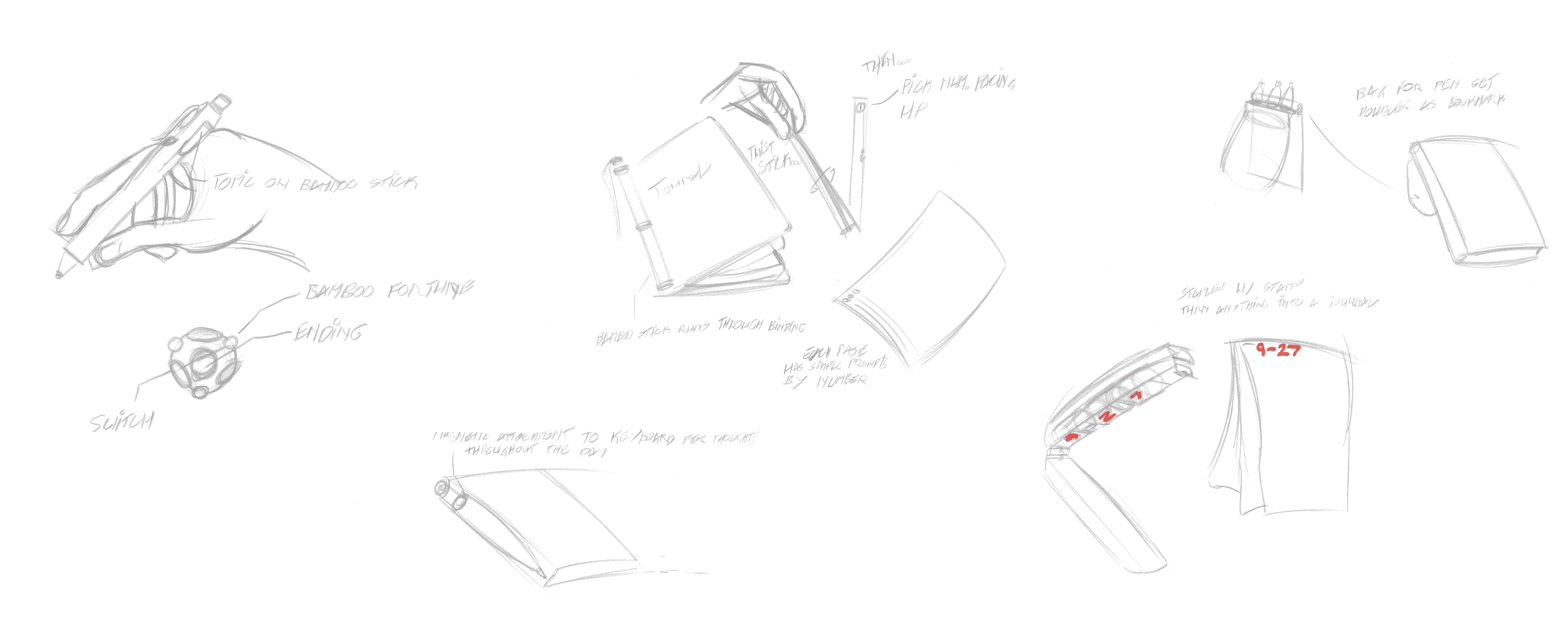
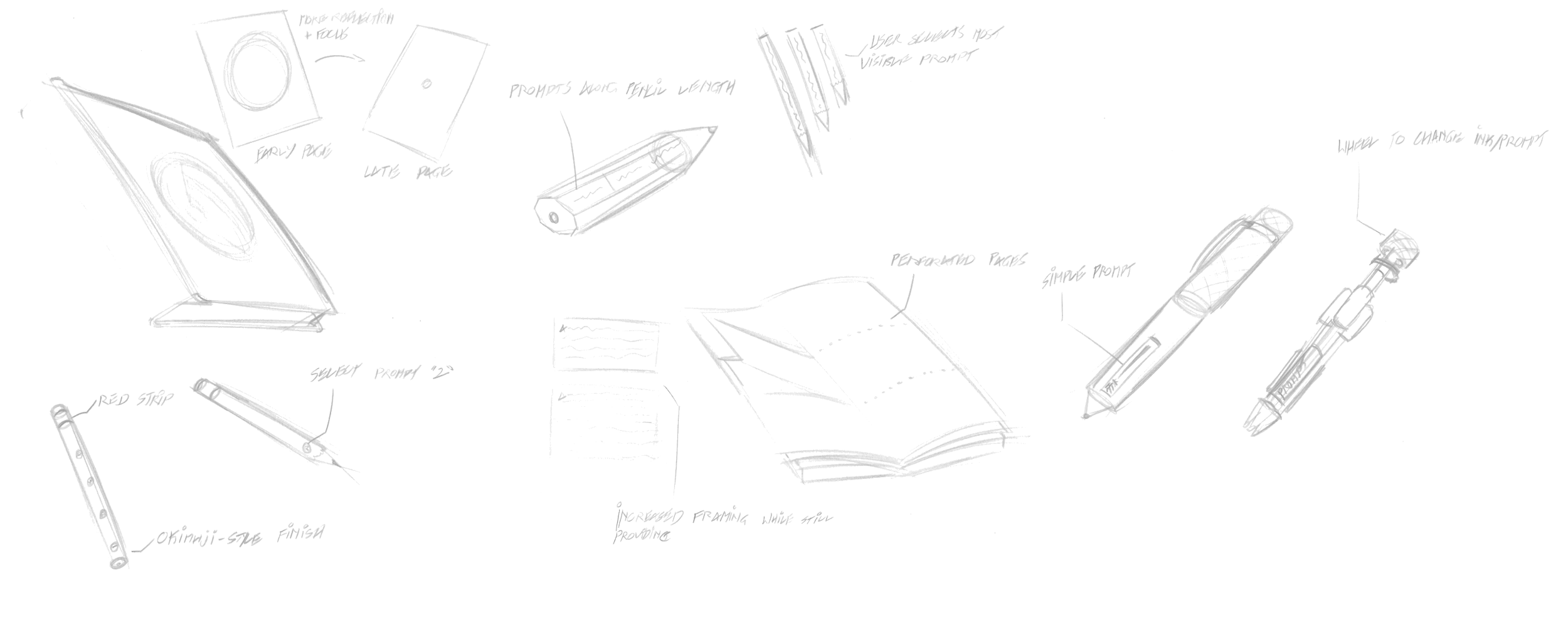
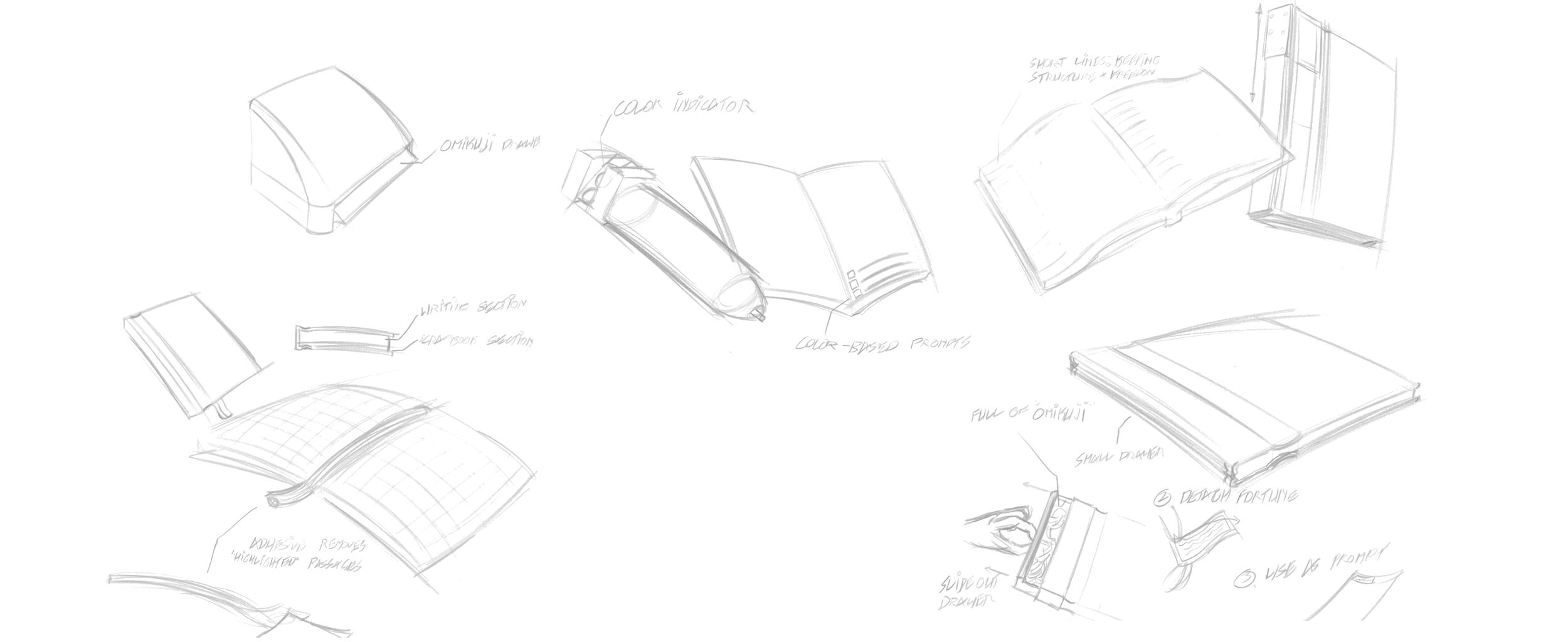
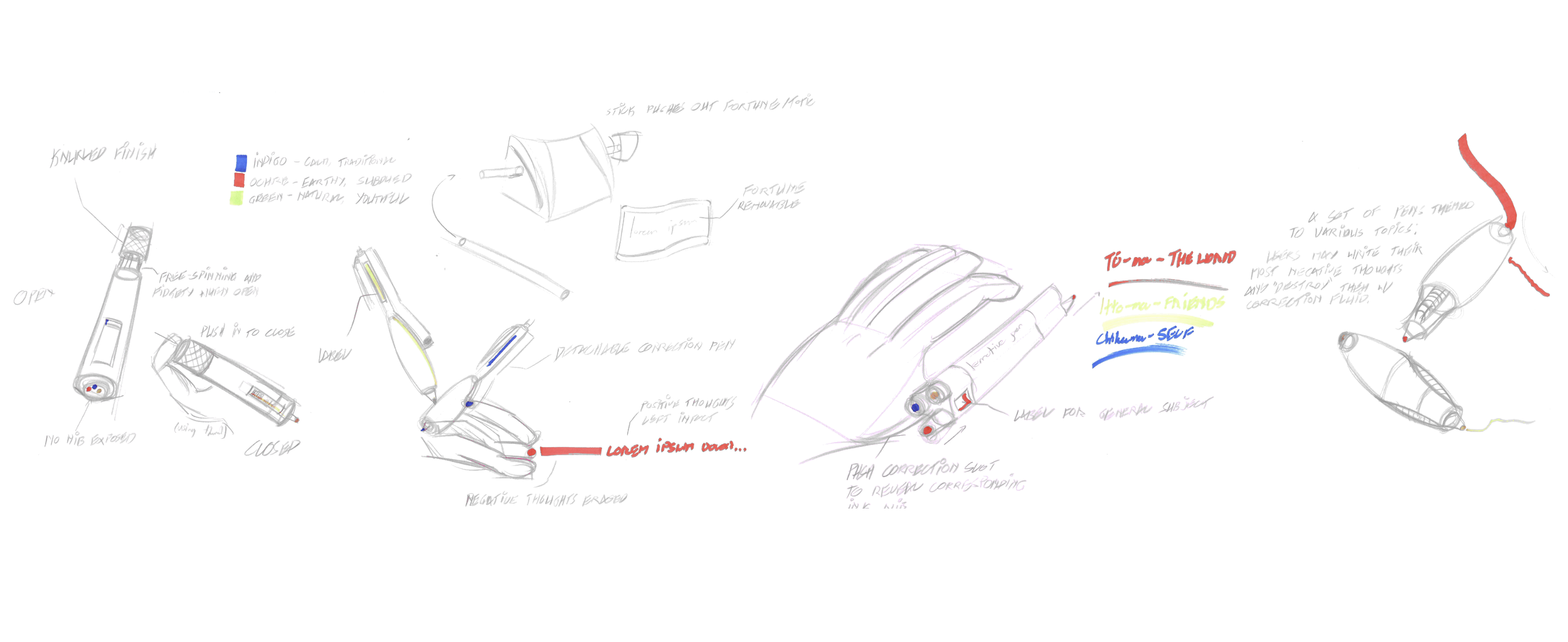
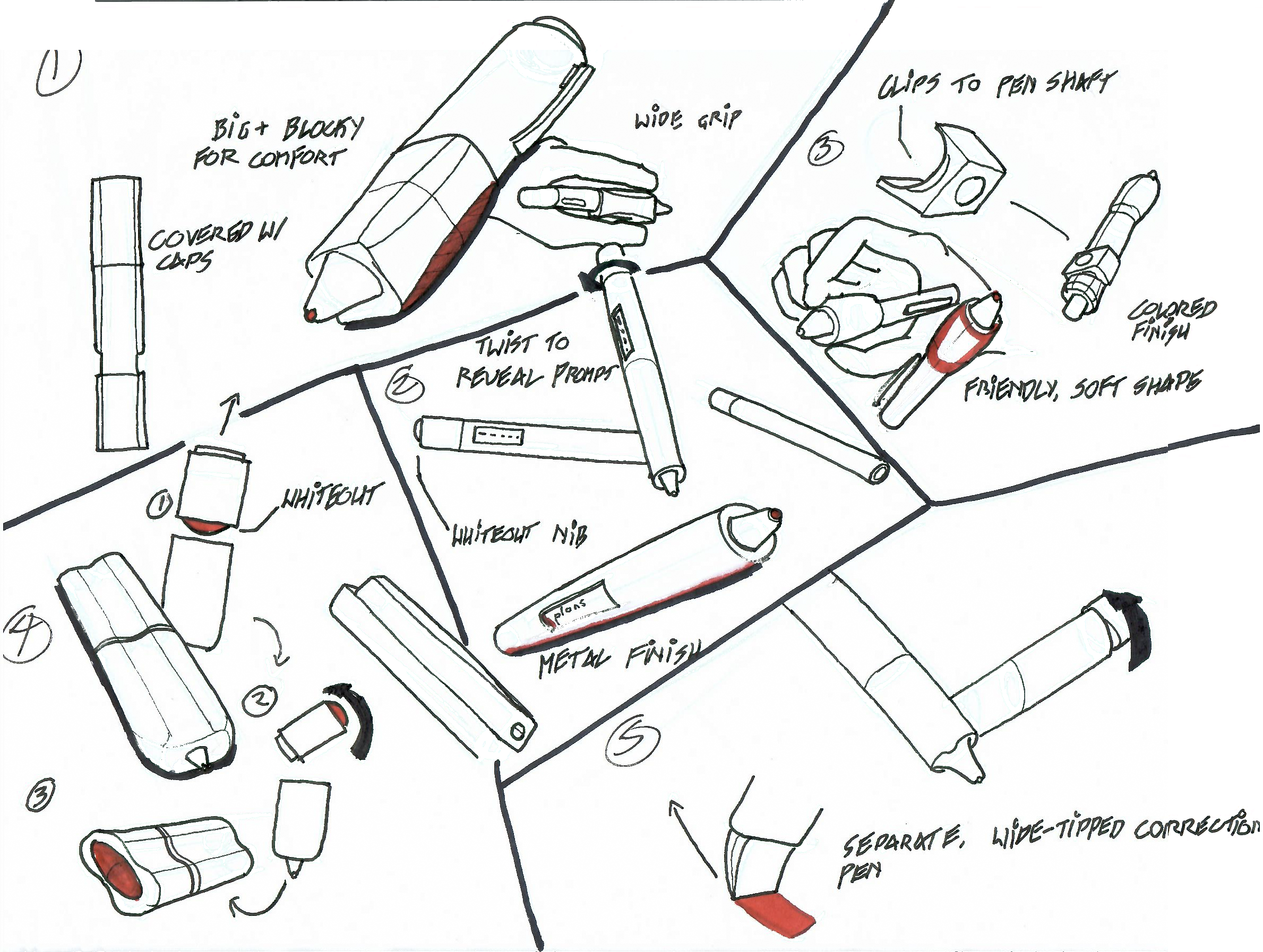
My early ideation focused on a mix of different stationery items, generally including a prompt in a range from low to high-specificity.
Art-forward, cathartic outlook; each pen has a reservoir for both ink and correction fluid, where users can "correct" their most upsetting thoughts
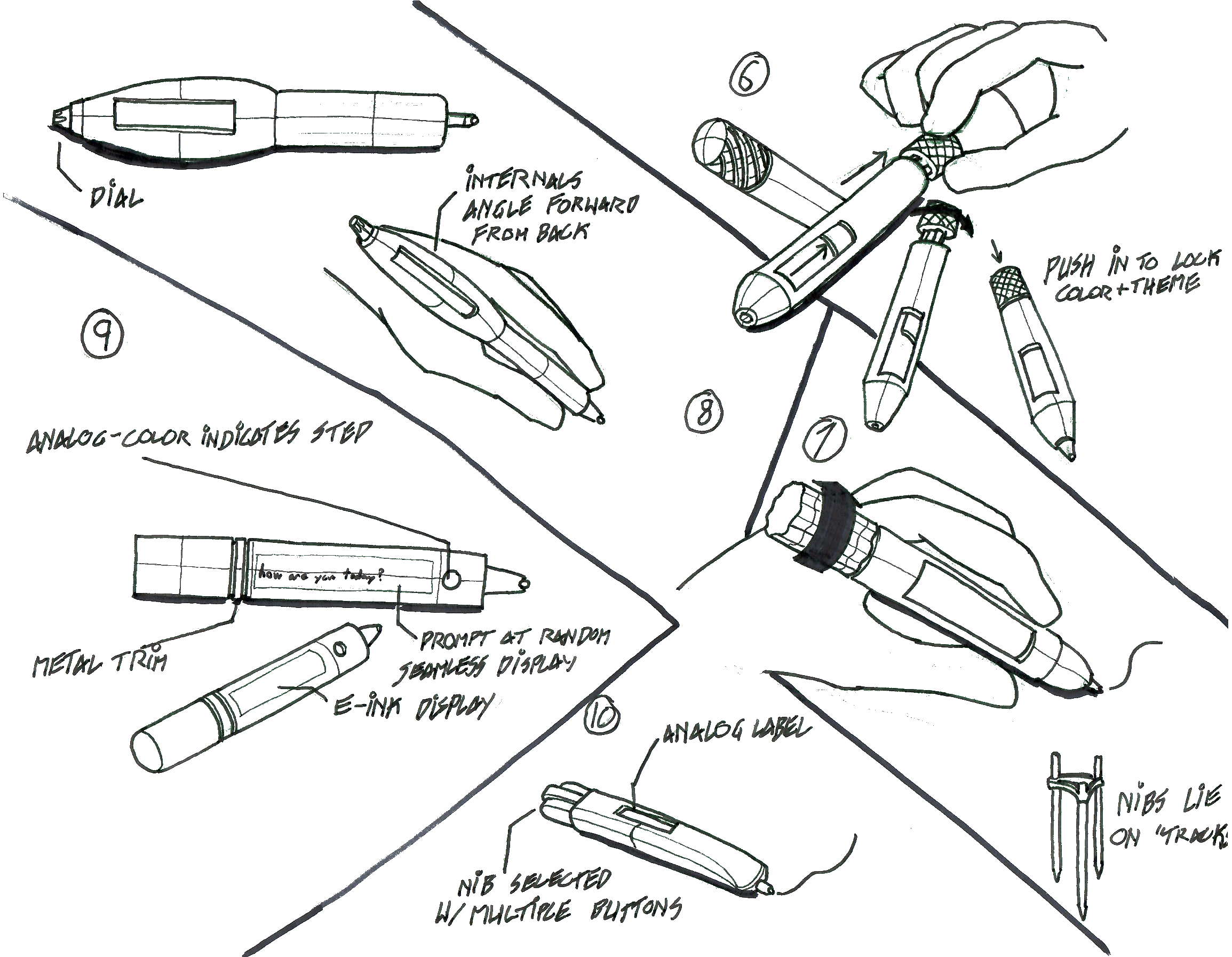
3-color twist pen, where the user twists a cap on the back of a pen, bringing up a short prompt for the user; the basis for my final design
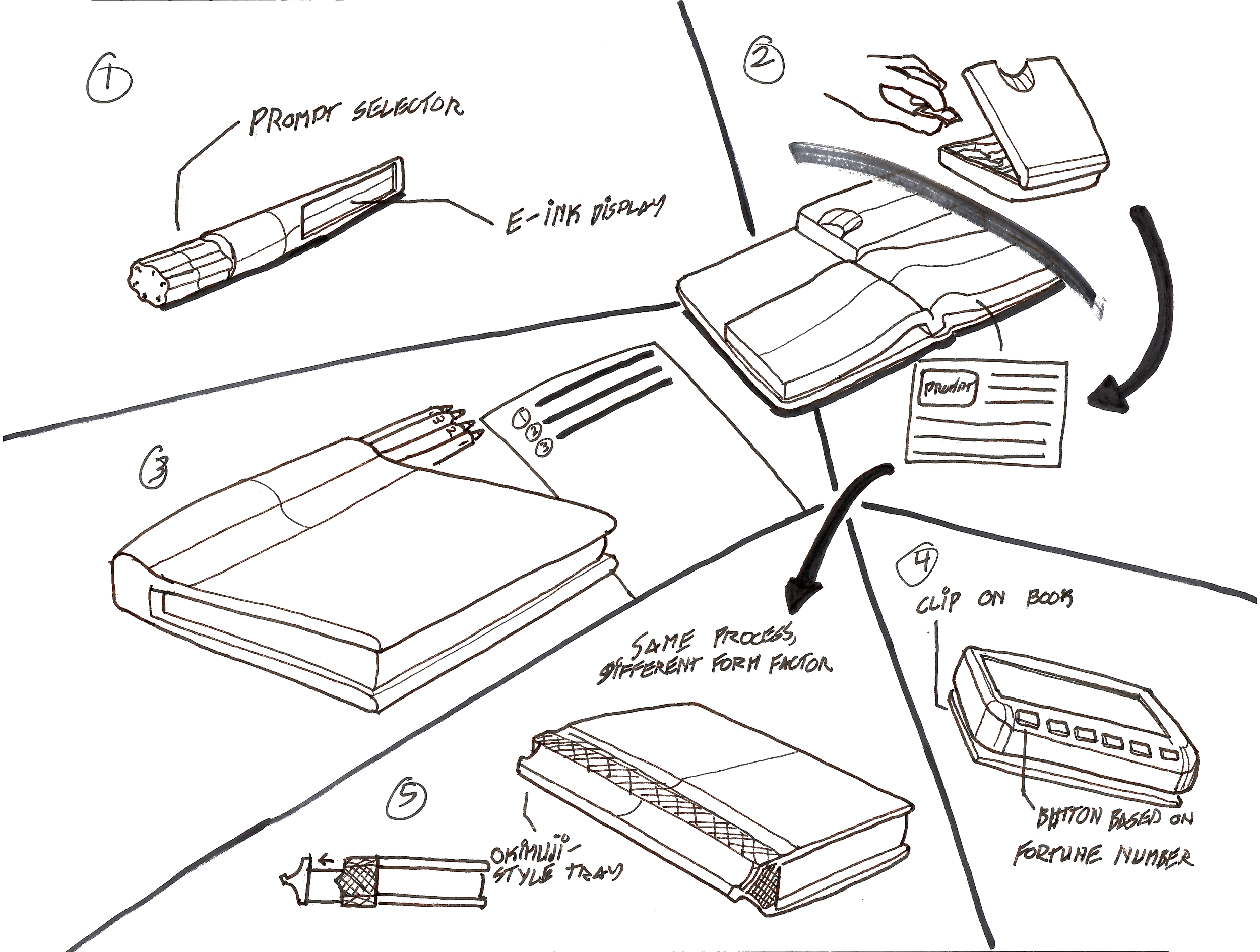
Based on "Omikuji" - the user draws a prompt using bamboo sticks or other means, attaching it to their journal, when they run out of ideas
Mockup Testing
Once I decided on the pen as a concept, I created a series of 3D-printed parts to test the ergonomics of the twisting motion with my interviewees. I biased my mockups towards a larger size to accommodate the mechanism and improve comfort, but not enough to be overly bulky.
My interviewees ultimately opted for a relatively long, thin design with a twist cap merging with the larger form. They also preferred the simpler appearance, which matched what I already planned for the pen’s appearance.